
If you own a pool in Southwest Florida, you already know that using it should be simple. Walk outside, jump in, enjoy the water. But somewhere between the no-see-ums swarming the surface, the oak leaves floating in from next door, and the afternoon sun turning your deck into a frying pan, the experience gets old fast. Pool screens exist to solve exactly that problem, and for Florida homeowners, they are less of a luxury and more of a practical necessity.
This article breaks down how pool deck screens work, what types are available, what they protect against, and what you should think about before adding them to your outdoor space.
Why Florida Pool Owners Need Screening More Than Anywhere Else
Florida is not like other states when it comes to outdoor living. The climate is aggressive. From May through October, you are dealing with daily thunderstorms, relentless humidity, intense UV radiation, and insects that breed in standing water year-round. That combination creates real problems for pool owners who want to actually use their outdoor space.
Without adequate screening, a pool deck in Fort Myers or Naples becomes a maintenance project more than a retreat. You are skimming debris every morning, applying sunscreen every hour, and retreating inside the moment the bugs come out at dusk. The pool itself works fine. The experience around it does not.
Screens for pool areas address all of these issues at the same time. They keep the insects out, reduce the amount of debris that lands in the water, cut UV exposure on the deck surface, and make the space usable for more hours of the day and more months of the year than it would be otherwise.
What Pool Deck Screens Are Actually Protecting You From
Before choosing a screening system, it helps to understand exactly what you are dealing with. In Southwest Florida, there are four main problems pool screens need to handle.
Insects and Mosquitoes
Florida has over 80 species of mosquitoes. Several of them are active during daylight hours, not just at dusk. Add in no-see-ums, horse flies, and the general insect pressure that comes with living near water and wetlands, and you have a situation where bug spray alone is not a long-term solution. Pool screens with fine mesh openings block insects before they reach you. The right screen fabric lets air move through freely while keeping the bugs on the other side.
Airborne Debris
Palm fronds, oak leaves, seed pods, pollen, and dirt blown in from neighboring properties all end up in unscreened pools. Beyond the visual mess, organic debris breaks down in pool water and throws off your chemical balance. Screening your pool area dramatically reduces how often you need to clean and rebalance the water, which saves time and money on chemicals and maintenance over the course of a year.
UV Radiation
Southwest Florida receives some of the highest UV index readings in the continental United States. Extended UV exposure on your pool deck is not just a skin concern. It bleaches outdoor furniture, fades patio cushions, dries out wood decking, and degrades rubber and plastic components faster than they would wear in less sunny climates. Solar screen fabrics used on pool enclosures block a significant percentage of UV rays before they reach the deck surface, without making the space feel dark or enclosed.
Wind-Driven Rain
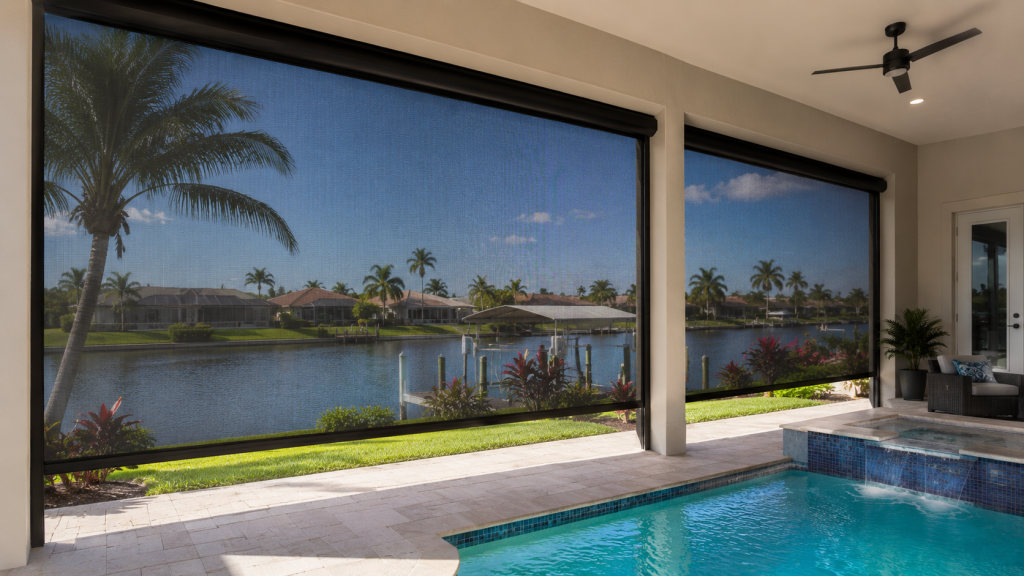
Summer afternoon storms in Florida are fast and intense. They blow in with little warning and can drop an inch of rain in twenty minutes. Without screening, your pool deck furniture, cushions, and anything else left outside gets soaked regularly. Motorized pool screens that drop on demand can protect the deck from wind-driven rain and let you stay outside longer when weather moves in from one direction.
Types of Screens Used for Pool Areas
Not all pool screening is the same. The type you choose should depend on your primary concern, whether that is insects, sun, privacy, or storm protection.
Fixed Screen Enclosures
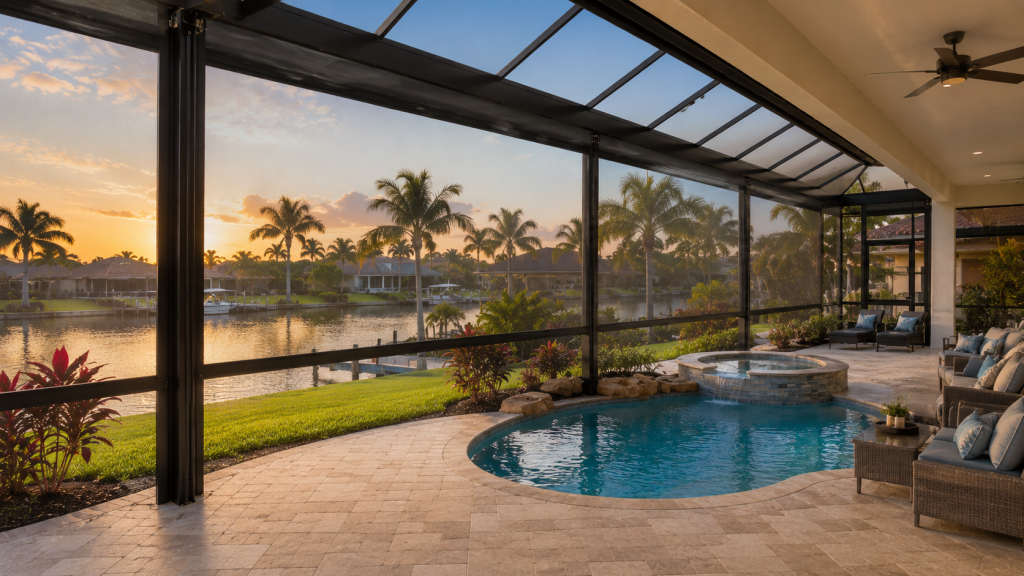
The traditional Florida pool cage is a fixed aluminum frame with fiberglass screen panels stretched across it. These have been standard in Florida for decades and do a good job of keeping insects out. The downside is that they are always up, they change the look of your home from the outside, they require periodic re-screening as the mesh deteriorates, and they offer no flexibility. When the screen is there, it is there. You cannot open it up on a cooler evening when you might want full airflow and an unobstructed view of the sky.
Motorized Retractable Pool Screens
Motorized retractable screens for pool decks work differently. They sit inside a housing mounted to the soffit or overhead structure of your lanai or pool area and drop down on demand when you want them. When you do not need them, they roll back up and disappear. You get the open-air experience on good days and the protection when conditions call for it. Most systems are controlled by a remote or wall switch, and many can be integrated with smart home systems.
For pool areas in Fort Myers, Cape Coral, Naples, and surrounding communities, motorized pool screens have become increasingly popular because they offer more flexibility than a fixed cage without sacrificing any of the practical protection.
Solar Screens for Pool Decks
Solar screen fabrics are rated by their openness factor, which refers to the percentage of light and air the fabric allows through. A tighter weave blocks more UV and provides more privacy but reduces airflow and view clarity. A more open weave maintains better visibility and airflow but blocks less sun. For pool areas, a mid-range openness factor typically works well because you want enough UV protection to make a difference without making the space feel closed in.
Insect Screens
If bugs are your primary concern and UV protection is secondary, fine mesh insect screens are the better fit. They have a higher openness factor than solar screens, which means better visibility and more natural light, but they are specifically designed to keep insects out rather than to block sun.
Privacy Screens
Homeowners with pools close to neighboring properties or street visibility often add privacy screening to one or more sides of the pool area. These denser fabrics block sightlines from the outside while still allowing light and air through from the inside.
What to Think About Before You Buy Pool Screens
Choosing the right pool screening system for a Southwest Florida home involves more than picking a fabric color. Here are the practical questions worth working through before you commit to anything.
What Is Your Primary Problem?
If bugs are driving you inside at dusk, prioritize insect screen fabric. If you are dealing with intense sun and UV exposure on the deck all day, a solar screen with a tighter weave makes more sense. If you want both, a layered approach or a combination fabric can address multiple concerns at once. Talking through your specific situation with an installer who works in your climate will help you avoid buying a product that solves one problem while leaving others unaddressed.
Fixed or Motorized?
Fixed pool enclosures are generally less expensive upfront but come with the trade-offs mentioned earlier. Motorized retractable screens cost more initially but add flexibility, improve your property’s curb appeal, and tend to last longer because the screen fabric is protected inside its housing when not in use. For homeowners who use their pool deck regularly and want to preserve the outdoor feel of the space, motorized is usually the better long-term investment.
What Is Your Structure?
Motorized pool screens require a mounting point, typically a soffit, beam, or overhead structure. If your pool area has a covered lanai or overhead structure on at least one side, installation is straightforward. Pools with no overhead structure may need additional framework before screening can be added. A site visit from an experienced installer will tell you quickly what is and is not feasible for your specific layout.
Wind Ratings and Weather Resistance
In Southwest Florida, any exterior product you install needs to hold up to coastal weather conditions. For motorized pool screens, look for systems with wind sensors that automatically retract the screen when winds exceed a safe threshold. This protects the screen fabric and the motor from damage during sudden gusts or storms. Most quality systems designed for Florida use will include this feature.
Warranties
Screen fabric and motor components both carry separate warranties. A quality motorized pool screen system should carry a warranty on the fabric of at least five years and a motor warranty of similar length. Some premium systems offer longer coverage. Understand what is covered and what is not before signing anything.
How Pool Screens Affect Property Value in Florida
In the Southwest Florida real estate market, outdoor living space is a significant factor in property value. A well-designed, well-screened pool area adds functional square footage to your home in the eyes of buyers. It extends the number of hours and months the space is usable, and it signals that the home has been maintained and upgraded thoughtfully.
Fixed screen cages have long been standard on Florida pool homes. Motorized pool screens are increasingly viewed as a premium upgrade, particularly among buyers who want flexibility and a cleaner exterior aesthetic. If you are thinking about resale at some point, a motorized screen system installed by a reputable local company with proper permits and documentation is an asset that holds its value.
Maintaining Your Pool Screens
Pool screens in Florida do require some basic upkeep. Fixed screen panels collect algae, mold, and mildew in humid conditions and typically need to be rinsed down a few times per year. The frames should be checked periodically for corrosion, particularly in coastal areas where salt air accelerates wear on aluminum.
Motorized retractable screens have the advantage of spending much of their life protected inside the housing. When they are in use, the fabric should be rinsed occasionally to remove pollen, dust, and salt deposits. The motor components are generally sealed and require minimal maintenance, but the tracks and housing should be kept clear of debris so the screen rolls up and down cleanly.
If you notice the screen is not sitting flush in the tracks, is slow to retract, or the motor sounds different than usual, contact your installer before the problem gets worse. Most issues with motorized screens are minor when caught early.
Working With a Local Installer in Southwest Florida
The best outcome for any pool screening project comes from working with an installer who knows the specific conditions of the Southwest Florida climate. Products spec’d for other markets may not be rated for Florida wind loads, salt air exposure, or sustained UV intensity. A local company with years of experience in this region will know which systems hold up and which ones do not, and they will be able to walk you through options based on your specific layout, orientation, and use habits rather than handing you a catalog and a price sheet.
Explore our motorized screens for pools and outdoor living spaces at to see what we install across Fort Myers, Cape Coral, Naples, and all of Southwest Florida, or call us at (239) 200-2886 to schedule your free in-home estimate and talk through the right option for your pool deck.